








Some of the projects I've been working on include: 📱 NotLate – A wellness app designed to help with overthinking and restless nights. 💰 ZapSpend – An expense tracker with receipt scanning, voice input, and CSV/PDF exports. 🚛 Trucker Diary – An iOS app built for truck drivers. 🎵 Duo Vinyl – A digital vinyl turntable experience for music lovers. As a solo developer, one of my biggest challenges isn't just building products. It's getting them discovered, attracting users, and figuring out what actually works after launch. 🌐 https://www.adribyte-studio.com/mobile-apps #IndieHacker #IndieDeveloper #iOSDevelopment #SaaS #Startup
Best JavaScript Tools in 2026
A collection of innovative JavaScript libraries and frameworks to elevate your web development experience. Browse 16 JavaScript tools from indie makers and solo founders, ranked by upvotes.
That’s every product in this category, ranked. See the latest launches, or submit your own product.
About JavaScript tools
JavaScript tools on Awesome Indie include libraries, snippet collections, converters, debugging helpers, data grids and starter kits, along with services that run code. They serve developers writing front-end or Node projects. Developer tools is the wide neighbour, frontend covers interface kits, open source highlights projects with shared code, and API pairs with the services you wire together.
Choosing a library is mostly about long-term cost. Check the licence, how recently it was updated, and whether it ships types for TypeScript. Look at bundle size and dependencies, because a tiny helper that pulls in many packages is rarely worth it. Compare documentation quality and whether examples match your framework. Utilities like Underdash, with JavaScript snippets for collection manipulation, are easy to copy in, whereas a data grid such as Jspreadsheet is a larger commitment with its own upgrade path. Starter kits like Shipped, a Next.js startup kit, save setup time but tie you to their structure. For hosted tools like YepCode, which connects APIs and services in a serverless environment, think about pricing, execution limits and lock-in.
Indie-made libraries often have a sharper focus and a maintainer who replies in issues. The trade-off is bus factor, so check whether the project is active and has more than one contributor if you plan to depend on it.
Frequently asked questions
How do I choose a JavaScript library?
Check the licence, last update, TypeScript support, bundle size and documentation. Look at open issues to see how the maintainer responds. Prefer small, focused libraries with few dependencies unless you need the extra scope.
What is the difference between JavaScript and frontend tools?
JavaScript tools relate to the language itself, such as libraries, converters and debugging. Frontend tools focus on interface building with components, templates and design handoff. A UI library written in JavaScript can sensibly appear in both.
Are indie JavaScript libraries safe to depend on?
They can be, if they are maintained. Check release history, issue activity, licence and how many people contribute. Pin versions, review what dependencies a package pulls in and have a fallback plan if development stops.
Login streak
Community
See allHealthE AI helps you manage fitness and wellness with AI-driven calorie tracking, macro targets, and personalized workout recommendations. It lets you log meals by photo or text, then analyzes nutrition to set your caloric deficit and macronutrients based on goals like fat loss or muscle gain. HealthE AI also tracks hydration, offers a daily feed, and guides setup through a questionnaire so you can follow a focused plan and measure progress clearly. HealthE AI is coming soon!
Creator of Get4All, a CBox premium link generator focused on simplicity and convenience.
Who to follow
See all- José M. Pérez

12 followers
- Charles Brecque

10 followers
- Mihnea Gămulescu
9 followers
- Gonzalo Cebrian
7 followers
- Ishola Boluwatife

7 followers
- WAN TANG
5 followers
Latest comments
See allI really enjoyed the characters and the ability to create your own makes the app feel more personal
onAfterLid1like
Maker here 👋 New: every @fuck.it user now gets a free link-in-bio page at fuck.it/@username. Like Linktree, but on the same name as your inbox. No extra subscription, no tracking pixels. Happy to answer any questions!
on@fuck.it
Sponsors
Just joined
See all- Orty

Joined
- ResumeUnbox Team
Joined
- Calsoft Social

Joined
- Daniel Smith

Joined
- Potato Tools

Joined
- Joseph Adler

Joined
Latest posts
See allI'm Khizar, founder of PotatoTools. I built PotatoTools because I was frustrated with online tools that were full of ads, paywalls, and forced signups. PotatoTools focuses on fast, browser-based tools that help with data conversion, calculations, content creation, productivity, and everyday tasks. No ads. No signup. No unnecessary complexity. Just useful tools that work. We're just getting started and would love your feedback on what tools you'd like to see next. Thanks for checking it out! Visit Potato Tools : https://potatotools.com/
A reading-note workflow worth testing: keep the excerpt and your interpretation separate. Capture a short passage with its source, then write one sentence about why it matters. Put related ideas into a mind map, and revisit the original passage before turning a note into a claim. This keeps a memorable quote from becoming a conclusion without context. This is the workflow behind MindNote, the cross-platform reading app I am building. It connects book excerpts, personal notes and mind maps, with a route back to the source and sync across Windows, macOS, iOS and Android. The product and reading workflow are here: https://www.mindnote.site/ How do you keep your own interpretation distinguishable from an author’s words?
A café changes the price of an espresso. Where does the old price survive? Usually in the menu PDF linked from Maps, even after someone updates the counter menu. For Menu-on we keep the destination stable: the QR code on the table and the link in the café’s profile open the same menu. The owner sends us the change; we edit the dish without replacing either link. One useful test: scan yesterday’s printed code after changing a price, then switch languages and check the same dish. The menu and editor are shown here: https://menu-on.com/main?lang=en

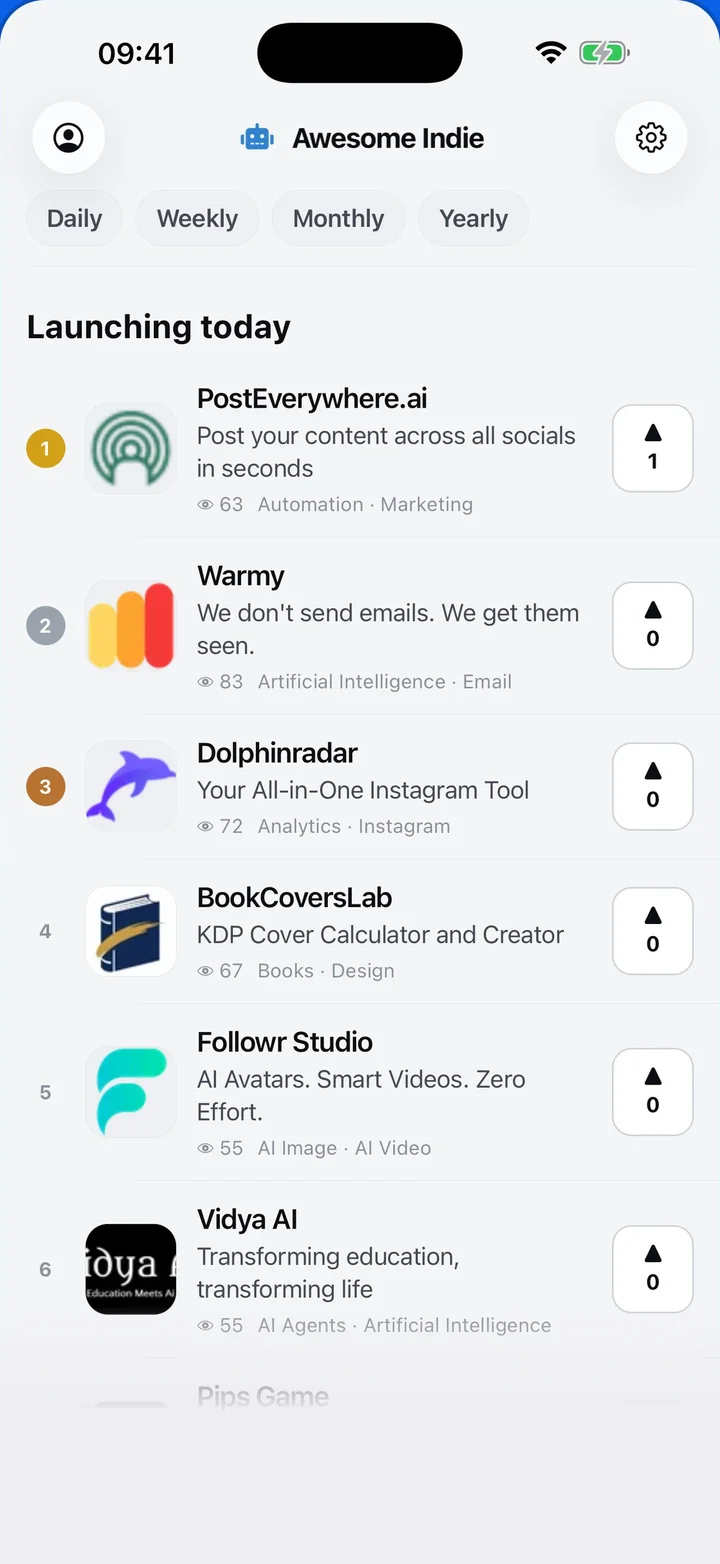
Awesome Indie
Free on iPhone and Android
Today's launches, in your pocket
Upvote, comment and follow with the account you already have.
Categories
Browse all- Daily
- Weekly
- Monthly
- Yearly
- Community
- Leaderboard
- Users
- Map
- Pricing
- App
- MCP
- Open Analytics
- Status
- About
- FAQ
- Terms
- Privacy
- Livro de Reclamações
© 2026 Awesome Indie